



When it comes to natural, versatile skincare, Jojoba Oil for Skin is often referred to as the “liquid gold” of botanical extracts. Derived from the seeds of the Simmondsia chinensis desert shrub, native to North America, Jojoba is not technically an oil but a liquid wax ester. This seemingly minor botanical distinction is precisely why Jojoba oil has become a favourite among dermatologists and beauty experts for its unparalleled ability to treat and balance virtually every skin type, from the excessively oily to the severely dry.
Its unique chemical composition allows it to deliver profound moisture, balance sebum production, soothe inflammation, and fight the signs of aging without the greasiness or pore-clogging risks associated with many traditional plant oils. Understanding how this remarkable substance interacts with your skin is the key to harnessing its full potential, unlocking a balanced and radiant complexion.
⚕️ Disclaimer The content in this article is for informational purposes only and is not a substitute for professional medical advice. Always consult with a doctor.
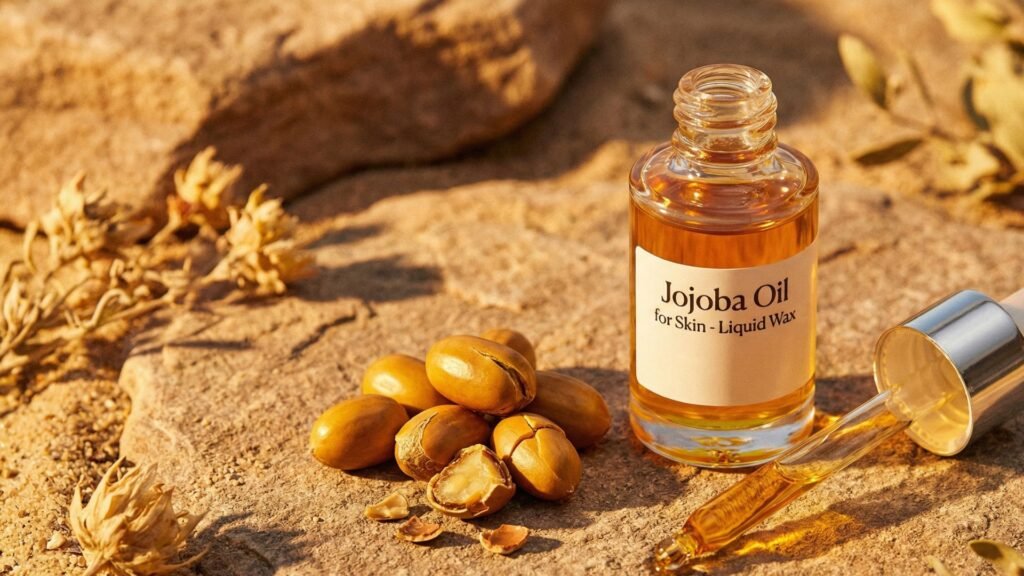
Section 1: Why Jojoba Oil is Different (The Power of Sebum Mimicry)
The unparalleled efficacy of Jojoba Oil for Skin rests on one unique characteristic: its molecular structure is almost identical to human sebum. Sebum is the oily, waxy substance naturally produced by the sebaceous glands in your skin, essential for lubricating and protecting the skin barrier.
The Chemistry of the Difference
Most common plant oils (like coconut, olive, or almond) are composed primarily of triglycerides. While they offer moisturizing benefits, their structure is different from human sebum, and they can sometimes sit on the skin’s surface, contributing to a greasy residue or clogging pores.
Jojoba oil, however, is primarily a wax ester. This means its molecular structure closely mirrors the wax esters found in healthy human sebum (which accounts for about 25% of the total sebum composition).
- Recognition and Penetration: Because the skin recognizes Jojoba oil as its own natural component, it seamlessly accepts the wax ester. This allows the oil to penetrate deeper into the skin’s outer layers, delivering hydration and essential fatty acids directly where they are needed, without blocking the surface.
- Non-Comedogenic Status: Since Jojoba oil is so similar to human sebum, it signals to the sebaceous glands that the skin is sufficiently protected. Crucially, its molecular size and structure make it inherently non-comedogenic—meaning it will not clog pores. This makes Jojoba one of the safest and most effective natural oils for individuals prone to acne and blackheads.
This unique sebum mimicry allows Jojoba oil to stabilize the skin’s natural lipid barrier, providing deep protection and moisture regulation that few other plant derivatives can match.
Section 2: Core Benefits of Jojoba Oil for Skin Health
The structural similarity to sebum translates into a wide array of therapeutic benefits, making Jojoba Oil for Skin a true multi-tasker in any natural beauty regimen.
1. Balancing Oily Skin and Controlling Breakouts
This is perhaps Jojoba oil’s most counter-intuitive yet powerful benefit. When the skin is stripped of its natural oils (often due to harsh cleansers or over-washing), it enters a protective panic mode and overproduces sebum to compensate, leading to an excessively oily complexion and clogged pores.
- Feedback Loop Correction: When Jojoba oil is applied, the skin’s sebaceous glands detect a sufficient level of moisture and protection on the surface. This triggers a natural biological feedback loop that signals the glands to slow down their own sebum production. Over time, consistent use of Jojoba oil can help regulate and normalize sebum output, leading to a balanced, less oily, and less congested complexion.
- Acne Treatment: By modulating sebum production and simultaneously providing a moisturizing barrier that doesn’t feed bacteria, Jojoba oil helps manage the underlying causes of acne. Its mild anti-inflammatory properties further reduce the redness, swelling, and discomfort of active breakouts.
2. Deep, Lasting Moisturization
Jojoba oil acts as a powerful emollient, meaning it helps fill the tiny gaps between skin cells, creating a smooth and supple surface.
- Protective Barrier: Unlike heavy occlusive ingredients that completely block the skin, Jojoba oil forms a semi-permeable, protective layer. This barrier effectively seals in moisture—preventing Trans-Epidermal Water Loss (TEWL)—without suffocating the skin. This makes it an excellent choice for treating dry patches, flaky skin, and conditions like eczema and psoriasis, where barrier function is compromised.
3. Anti-Aging and Antioxidant Action
The composition of Jojoba oil is rich in valuable micronutrients that help maintain youthful vitality.
- Vitamin E Content: Jojoba oil naturally contains high levels of Vitamin E (tocopherol), one of the most powerful fat-soluble antioxidants. Vitamin E fights free radicals—unstable molecules caused by UV rays, pollution, and stress—which accelerate the breakdown of collagen and elastin. By neutralizing these damaging agents, Jojoba oil helps reduce the appearance of fine lines and wrinkles.
- Collagen Synthesis: The application of Vitamin E and other compounds in Jojoba oil may stimulate the production of collagen, improving skin elasticity and firmness over time.
4. Soothing Inflammation and Healing
Due to its potent anti-inflammatory properties, Jojoba oil is incredibly soothing for irritated or sensitive skin.
- Redness Relief: It can be used to calm sunburn, windburn, or temporary redness. Its gentle nature makes it suitable for applying to sensitive areas, including under the eyes.
Section 3: Practical Uses and Applications
The versatility of Jojoba Oil for Skin means it can replace multiple products in your bathroom cabinet.
1. Daily Moisturizer and Serum
This is the most common and effective application. Because it is absorbed quickly, it can be seamlessly integrated into both morning and evening routines.
- Application: After cleansing and applying any water-based serums or hyaluronic acid, dispense 2 to 3 drops of Jojoba oil into your palm. Rub your hands together to warm the oil, and gently press it onto your face, neck, and décolletage while the skin is still slightly damp.
2. The Oil Cleansing Method (OCM)
Jojoba oil is an exceptional ingredient for dissolving makeup, sunscreen, and the day’s buildup of dirt and excess sebum.
- Application: Apply a generous amount (1-2 pumps) of Jojoba oil to a dry face. Gently massage the oil into your skin for one full minute, paying attention to areas with heavy makeup or congestion. The oil will emulsify and dissolve the grime.
- Removal: Wipe the oil away with a warm, damp cloth, or follow up with a gentle, water-based cleanser (the “double cleanse” method). This leaves the skin clean yet perfectly nourished, preventing the post-cleanse tightness.
3. The Perfect Carrier Oil
As highlighted in the previous article on rosemary oil, Jojoba is the ideal carrier oil for diluting potent essential oils for topical use, as it ensures proper penetration without causing irritation. The blend of a high-quality essential oil (like rosemary, tea tree, or lavender) with Jojoba oil is the gold standard for therapeutic applications.
4. Beyond the Face
Jojoba oil’s benefits extend to the entire body:
- Body Moisturizer: Use a few drops on damp skin post-shower to lock in moisture, focusing on rough areas like elbows and knees.
- Cuticle and Nail Health: Massage a drop into your cuticles daily to strengthen nails and soften the surrounding skin.
- Hair Conditioner: Use a small amount to treat frizzy ends or to condition the hair shaft, adding shine without heaviness.
Section 4: Choosing the Right Product for Your Skin
To ensure you receive all the benefits of Jojoba Oil for Skin, quality matters immensely. Inferior processing can strip the oil of its vital nutrients and chemical integrity.
- 100% Pure: Always look for a product that is labelled as 100% pure Simmondsia chinensis oil, with no added ingredients, fragrances, or preservatives.
- Unrefined and Cold-Pressed: The best Jojoba oil is unrefined (retaining its natural golden colour and nutrient profile) and cold-pressed (meaning it was extracted without heat, which preserves the delicate wax esters, Vitamin E, and antioxidants). Avoid chemically extracted or refined oils.
- Organic: Choosing organic ensures the oil is free from pesticides and chemical residues, further reducing the chances of skin irritation.
Storage Tips
Because Jojoba is a wax ester, it is naturally resistant to oxidation (going rancid) compared to triglyceride oils. However, to maintain its potency, store it in a cool, dark place, ideally in an opaque or amber glass bottle to protect it from light degradation.
By embracing the unique, skin-identical structure of this remarkable desert wax, you gain a versatile, effective, and natural solution capable of supporting the health, balance, and radiance of virtually any complexion.
🛒 [OUR TOP PICK] Product Recommendation (Amazon UK)
To experience the full therapeutic benefits of sebum mimicry, we recommend a certified organic, cold-pressed option.
Brand Name: Fushi
Product Type: Fushi Organic Jojoba Oil (This product is 100% pure, unrefined, and organic, ensuring the natural integrity of the wax esters is maintained for optimal skin absorption and balancing effects).