



Elderberry for Immune Support is more than just a passing wellness trend; it represents a tradition of natural healing that spans centuries, now bolstered by modern scientific inquiry. The deep purple berries of the Sambucus nigra plant, commonly known as European or Black Elder, have been a staple in folk medicine across Europe and North America, cherished for their purported ability to ward off and shorten the duration of seasonal ailments like the common cold and influenza. As consumers increasingly seek out natural, effective ways to bolster their body’s defenses, Elderberry for Immune Support has moved from the herbalist’s cabinet to become a mainstream staple in the Cold & Flu Relief arsenal.
This comprehensive guide delves into the botanical origins of elderberry, dissects the potent bioactive compounds that give it its immune-modulating properties, reviews the most compelling clinical research, and provides practical, up-to-date guidance on dosage, safety, and choosing the right supplement.
[DISCLAIMER] This article is for informational purposes only and is not intended to be a substitute for professional medical advice, diagnosis, or treatment. Always seek the advice of a qualified healthcare provider with any questions you may have regarding a medical condition or before implementing any new health regimen or supplement.
1. Botanical Background: The Sambucus nigra Story
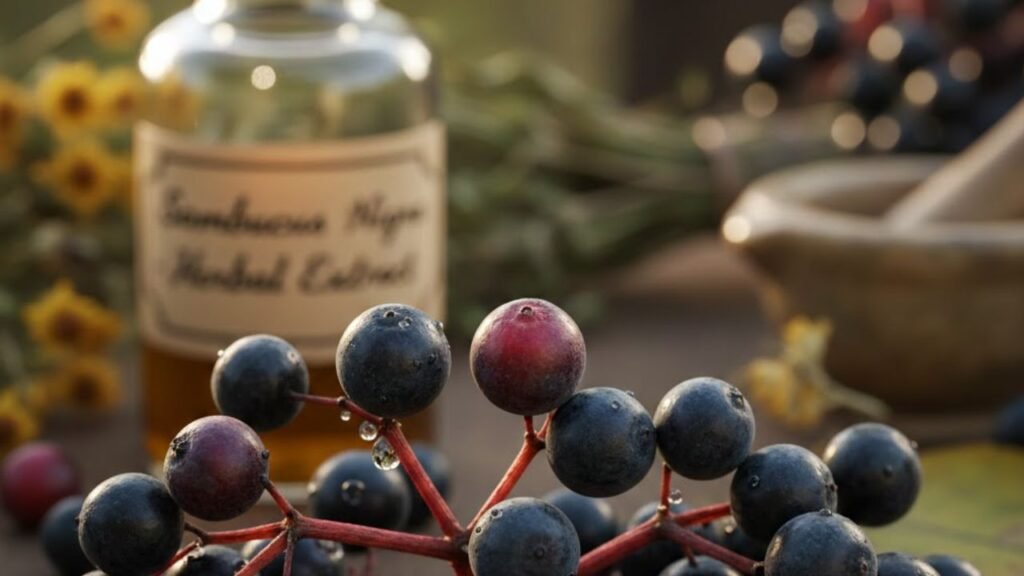
The elderberry plant, scientifically classified as Sambucus nigra, is a deciduous shrub or small tree native to Europe, North Africa, and parts of Asia. It is distinguishable by its clusters of creamy-white flowers (elderflowers) in late spring and its deep, dark purple-to-black berries that ripen in late summer and early autumn.
A History Steeped in Tradition
The use of the elder plant dates back thousands of years. Hippocrates, the ancient Greek “Father of Medicine,” referred to the elder tree as his “medicine chest,” utilizing various parts of the plant.
- Ancient Egypt: Used the flowers to heal burns and improve complexion.
- Native American Traditions: Used the berries and flowers for a variety of ailments, including fever, rheumatism, and infections.
- European Folk Medicine: The berries were commonly prepared as a syrup or wine to treat respiratory illnesses and boost general vitality, a tradition that persists today.
The Difference Between Berries and Flowers
While the focus of Elderberry for Immune Support is typically on the fruit, both the berries and the flowers (Sambucus flos) possess therapeutic value:
| Plant Part | Primary Use (Traditional & Modern) | Key Compounds |
| Berries (S. nigra) | Cold, flu, and viral symptom relief; immune system modulation. | Anthocyanins, Flavonoids (Quercetin, Rutin), Phenolic Acids, Vitamin C. |
| Flowers (S. flos) | Diuretic, anti-inflammatory, and diaphoretic (sweat-inducing) for fevers and upper respiratory tract infections. | Flavonols, Mucilages, Volatile Oils. |

2. The Science of Immune Support: What Makes Elderberry Effective?
The power of Elderberry for Immune Support lies in its incredibly rich and complex phytochemical profile. These plant-derived compounds work synergistically to provide the documented health benefits.
A. The Anthocyanin Advantage
Anthocyanins are the vibrant pigments responsible for the deep purple-black color of the berries. They are a potent class of flavonoid antioxidants and are considered the primary active component in elderberry extract.
- Direct Antiviral Action: Studies have shown that elderberry anthocyanins can directly interfere with the lifecycle of certain viruses, most notably the Influenza A and B viruses. They are believed to inhibit the early stages of infection by blocking the virus’s ability to bind to and enter host cells. Specifically, they may inhibit neuraminidase, an enzyme that the flu virus uses to replicate and spread throughout the body.
- Antioxidant Power: Anthocyanins are powerful free-radical scavengers. They help combat oxidative stress, which is elevated during an immune response or illness. By reducing cellular damage, antioxidants support the overall function of the immune system.
B. Immunomodulatory Effects
Elderberry does not simply “boost” the immune system indiscriminately; its action is often described as immunomodulatory, meaning it helps regulate and balance the immune response.
- Cytokine Production: Research suggests that elderberry extract can promote the production of inflammatory cytokines (chemical messengers) by immune cells, particularly early in an infection. This response helps the body mount a quick and effective defense.
- White Blood Cell Support: Some in vitro studies indicate that elderberry compounds may stimulate the activity of key immune cells, such as macrophages, which are responsible for engulfing and destroying pathogens.
C. Anti-Inflammatory Properties
The flavonoids, particularly quercetin, in elderberry possess significant anti-inflammatory properties. While inflammation is a necessary part of the immune response, excessive or prolonged inflammation contributes to symptoms like body aches, sore throat, and nasal congestion. Elderberry’s ability to temper this inflammatory cascade may be key to its symptom-relieving effects.
3. Clinical Evidence: Elderberry and the Common Cold & Flu
The traditional wisdom surrounding Elderberry for Immune Support has been subjected to modern clinical trials, with promising results primarily focusing on reducing the duration and severity of cold and flu symptoms.
A. Influenza (The Flu)
One of the most compelling areas of research is elderberry’s efficacy against the influenza virus.
- Early Symptom Relief: A key randomized, double-blind, placebo-controlled study from 2004 involving 60 patients with influenza found that those taking elderberry syrup saw symptom relief, on average, four days earlier than the placebo group. A significant majority of the elderberry group reported being completely cured within 2-3 days, compared to at least 6 days for the placebo group.
- Reduced Severity: Another clinical trial involving air travelers, a group particularly susceptible to respiratory illness, demonstrated that those who used elderberry extract had a significantly reduced duration of cold symptoms and less severe symptoms compared to the placebo group. While it did not significantly prevent the illness, it lessened the overall symptom load.
The consensus across these and other studies is that elderberry extract, especially when taken at the onset of symptoms, can significantly shorten the duration of influenza A and B infections and reduce the severity of symptoms like fever, muscle aches, and congestion.
B. The Common Cold
While the flu studies are more definitive, elderberry has also shown benefit for the common cold, which is typically caused by rhinoviruses and coronaviruses.
- Upper Respiratory Tract Symptoms: A systematic review and meta-analysis examining the use of Sambucus nigra for upper respiratory symptoms found that supplementation substantially reduced the severity and duration of symptoms. The benefit is often attributed to its ability to modulate inflammation and its overall supportive role for the mucous membranes of the respiratory tract.
It is crucial to note that while the evidence is strong for its role in treatment (reducing duration and severity), the evidence for its role in prevention (prophylaxis) is still limited and requires more large-scale human trials.
4. Practical Guide to Elderberry Supplementation
Choosing and using elderberry supplements requires careful consideration of safety, sourcing, and dosage.
A. Types of Elderberry Supplements
Elderberry is available in many forms, each with varying concentrations of the active compounds.
| Supplement Form | Description | Best For |
| Syrup | Traditional, often sweetened with honey, making it palatable for children. Bioavailable and easy to dose. | Acute cold/flu symptoms; popular for children (consult a pediatrician). |
| Gummies | Convenient, popular choice, but check for added sugars and ensure a high concentration of true extract. | Daily maintenance or convenience. |
| Capsules/Tablets | Contain concentrated extract, often standardized to a certain anthocyanin content. | Precise dosing; long-term, non-symptomatic immune maintenance. |
| Tea/Tincture | Infusion of dried berries/flowers or a liquid extract in alcohol/glycerine. | Mild symptoms; a soothing option. |
B. Safety and Dosage Guidelines
The most critical safety warning for elderberry is that raw berries, bark, leaves, and unripe fruit contain cyanogenic glycosides, which can release cyanide—a toxin—upon digestion. These parts of the plant must be avoided or properly processed (cooked) before consumption. Only standardized, commercially prepared elderberry supplements or properly cooked berries should be consumed.
- Standardized Extracts: Look for supplements standardized to a certain percentage of anthocyanins or flavonoids to ensure potency.
- Adult Dosage (Acute Phase): Typical recommendations for treating acute flu symptoms range from 15 mL of elderberry syrup (equivalent to approximately 5.7g of extract) taken four times a day for 3–5 days, or as directed on the specific product label. For capsules, doses of 300 mg to 500 mg of standardized extract taken 2-4 times daily are common during the height of illness.
- Daily Maintenance: A lower dose, such as 300 mg of standardized extract once daily, is often used for proactive immune support during cold and flu season.
- Contraindications: Elderberry can potentially interact with immunosuppressant drugs (used for organ transplant recipients or some autoimmune conditions) as it may stimulate the immune system. Pregnant or breastfeeding women and individuals with pre-existing conditions should consult a healthcare provider before use.
5. Synergy: Pairing Elderberry with Other Immune Nutrients
While Elderberry for Immune Support is powerful on its own, it can be combined with other proven natural compounds to create a synergistic defense strategy.
| Nutrient/Herb | Mechanism of Action | How it Works with Elderberry |
| Vitamin C | Potent antioxidant, supports white blood cell function, and reduces the duration of colds. | Provides cellular protection, complementing elderberry’s antiviral action. |
| Zinc | Essential mineral required for immune cell development and function; inhibits viral replication. | Directly enhances immune cell communication and helps fight the virus itself. |
| Quercetin | A potent flavonoid with strong anti-inflammatory and antioxidant effects; often found in elderberry but can be supplemented separately for a higher dose. | Reinforces elderberry’s anti-inflammatory and antioxidant profile. |
| Echinacea | Stimulates non-specific immune function (macrophages, natural killer cells). | Can be a complementary preventative measure; some studies show it can be as effective as pharmaceutical antivirals when combined with elderberry. |
6. [OUR TOP PICK] Find the Best Elderberry Supplement
Finding a high-quality, effective elderberry supplement is crucial. Our top pick focuses on purity, potency (standardization), and ease of use.
[OUR TOP PICK]: Sambucol Black Elderberry Original Formula Syrup (Amazon UK)
- Why it’s Our Pick: Sambucol is one of the most widely researched elderberry products, having been used in several key clinical trials. It uses a proprietary black elderberry extract (Sambucus nigra) standardized to ensure consistent potency.
- Key Features: It’s a liquid syrup, which is highly bioavailable and easily absorbed. It is suitable for year-round use and intensive use during an immune challenge.
Disclaimer: As an Amazon Associate, Green and Cure may earn from qualifying purchases.
7. Holistic Immune Strategy
Relying on supplements alone is never a complete strategy. Maximizing the benefits of Elderberry for Immune Support requires integrating it into a holistic healthy lifestyle.
- Prioritize Sleep: Quality sleep is non-negotiable for immune health, as the body produces key protective proteins (cytokines) during rest.
- Stay Hydrated: Water, herbal teas, and clear broths help thin mucus and keep respiratory passages healthy.
- Nutrient-Dense Diet: Focus on whole foods, including a rainbow of fruits and vegetables that provide vitamins A, C, E, and minerals like selenium and zinc. Gut health, supported by prebiotics and probiotics, is also intrinsically linked to immune strength.
- Manage Stress: Chronic stress elevates cortisol, which suppresses the immune response. Incorporate mindfulness, meditation, or light exercise to manage stress levels.
- Good Hygiene: Simple, consistent practices like frequent handwashing remain one of the most effective ways to prevent the spread of respiratory infections.
Conclusion: A Time-Tested and Science-Backed Ally
Elderberry for Immune Support is a formidable natural ally in the battle against seasonal illness. Backed by centuries of traditional use and an increasing body of modern clinical evidence, the potent antiviral and immunomodulatory properties of Sambucus nigra make it a worthy addition to any natural health regimen.
The research clearly shows its power is concentrated in reducing the duration and severity of flu and cold symptoms, especially when taken early. By understanding the science of its anthocyanin-rich composition and adhering to proper sourcing and dosage, consumers can confidently leverage this ancient botanical to fortify their health and embrace a proactive approach to well-being.
Study on Elderberry and Influenza Duration: “key randomized, double-blind, placebo-controlled study from 2004“
Study on Air Travelers: “clinical trial involving air travelers”
Information on Anthocyanins: “Anthocyanins are the vibrant pigments”