


The breath serves as the vital bridge between the conscious and unconscious mind. When we are stressed, anxious, or fearful, our breathing becomes shallow, rapid, and primarily confined to the chest. This signals danger to the brain, perpetuating the cycle of anxiety. By consciously learning to slow, deepen, and control the breath, we send an immediate “all clear” signal to the nervous system. This guide will explore the profound science of Yogic breathing and provide detailed, step-by-step instructions for the best Pranayama techniques to manage stress, alleviate anxiety, and dramatically improve mental focus.
⚕️ Disclaimer The content in this article is for informational purposes only and is not a substitute for professional medical advice. Always consult with a doctor.
Section 1: The Science of Breath and the Nervous System
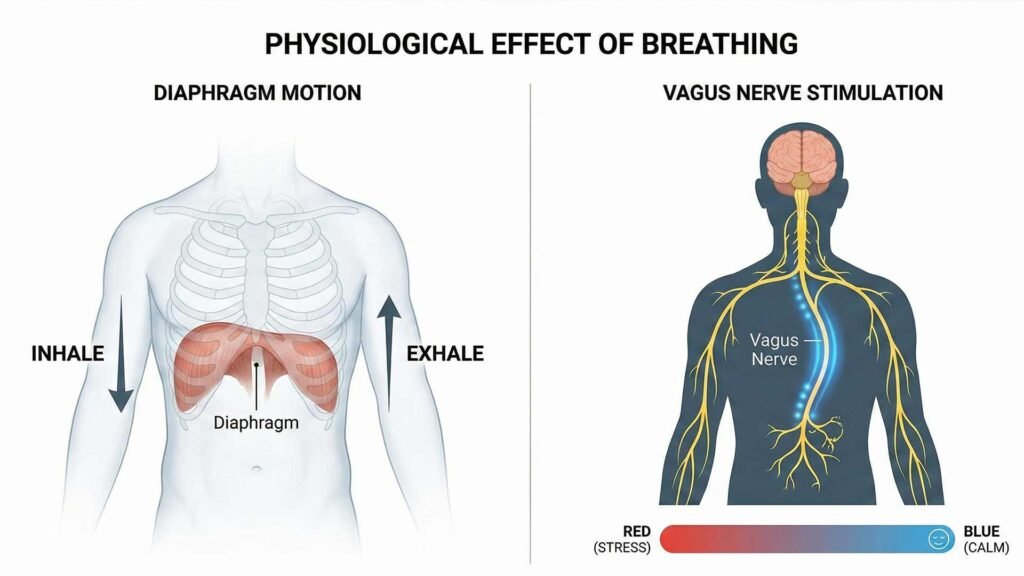
The effectiveness of Pranayama for Anxiety is not spiritual rhetoric; it is rooted in measurable human physiology and the intricate architecture of the nervous system.
When seeking immediate, tangible relief from stress and worry, mastering Pranayama for Anxiety is one of the most powerful and accessible tools available. Pranayama, often translated as the “extension of life force” or “breath control,” is the fourth limb of the ancient practice of yoga. Unlike passive meditation, Pranayama is an active technique that uses specific breath patterns to instantly regulate the body’s deepest involuntary systems.
The Vagus Nerve and the Parasympathetic Shift
The most critical physiological link is the Vagus nerve, the longest cranial nerve, which runs from the brainstem down to the abdomen, connecting to the heart, lungs, and digestive system. The Vagus nerve is the main information superhighway for the Parasympathetic Nervous System (PNS), which is responsible for the body’s “rest and digest” state.
- Stimulation: Slow, deep, and elongated exhalations stimulate the Vagus nerve. This stimulation acts like a gentle brake on the entire system.
- Immediate Calm: When the Vagus nerve is stimulated, it instantly overrides the Sympathetic Nervous System (SNS), which is the body’s “fight-or-flight” response responsible for anxiety and panic. The heart rate slows, blood pressure decreases, muscle tension releases, and the body conserves energy—all leading to a profound sense of physical and mental calm.
Optimizing Gas Exchange and Brain Function
Rapid, shallow breathing (hyperventilation) causes an imbalance in the ratio of oxygen and carbon dioxide.
- Carbon Dioxide Regulation: Slow, deep breathing allows carbon dioxide (CO2) to build up slightly in the bloodstream. While this sounds negative, the brain uses this CO2 concentration to regulate blood flow. A balanced CO2 level facilitates efficient transfer of oxygen from the blood to the cells and tissues, including the brain. This optimization enhances cognitive clarity, reduces mental fog, and improves concentration—vital counters to anxious, racing thoughts.
In essence, Pranayama is a biofeedback tool. By manipulating your breath, you intentionally shift your body’s state from stressed arousal to tranquil recovery, giving you an immediate antidote to anxiety.
Section 2: Foundational Pranayama Techniques (Calming and Balancing)
These techniques are the foundation of using Pranayama for Anxiety because their primary goal is to lower heart rate variability, quiet the mind, and restore equilibrium.
1. Nadi Shodhana (Alternate Nostril Breathing)
This is widely considered the single most effective Pranayama technique for immediate anxiety relief and calming the mind. It is believed to balance the Ida (cooling, feminine) and Pingala (heating, masculine) energy channels, leading to a balanced state.
How to Practice:
- Find a comfortable seated position with the spine straight.
- Use the Vishnu Mudra hand position: Fold the index and middle fingers of your right hand into your palm, leaving the thumb, ring finger, and little finger extended.
- Gently close your eyes.
- Starting Position: Close your right nostril with your right thumb. Inhale slowly and deeply through the left nostril.
- Hold (Optional): Gently close the left nostril with your ring finger and pause the breath for a moment.
- Exhale: Open the right nostril and exhale completely and slowly through the right nostril.
- Inhale: Inhale slowly and deeply through the right nostril.
- Exhale: Close the right nostril, open the left, and exhale completely through the left nostril.
- This completes one full cycle. Continue alternating for 5 to 10 minutes, ensuring the exhale is slightly longer than the inhale.
2. Sama Vritti (Equal Ratio Breathing)
This technique focuses purely on rhythm and is an excellent tool for training the mind to focus, thereby interrupting the anxious thought loop.
How to Practice:
- Inhale slowly and smoothly, counting to a comfortable number (e.g., 4, 5, or 6).
- Without holding the breath, exhale slowly and smoothly for the exact same count (e.g., 4, 5, or 6).
- Repeat this process, maintaining the equal rhythm and ensuring the breath is steady, not rushed.
- Practice for 3 to 5 minutes. Once mastered, you can introduce a brief pause between the inhale and exhale (e.g., Inhale 4, Hold 4, Exhale 4, Hold 4).
3. Dirga Swasam (Three-Part Breath)
This technique ensures you are using your full lung capacity, which is essential because shallow chest breathing is a hallmark of anxiety.
How to Practice:
- Place one hand on your belly and one hand on your ribcage.
- Inhale: Breathe in slowly, first filling the belly (pushing the bottom hand out), then expanding the ribs (pushing the top hand out), and finally letting the breath rise into the upper chest/collarbone.
- Exhale: Exhale slowly, reversing the order: first emptying the chest, then the ribs, and finally pulling the belly button gently toward the spine to expel the last bit of air.
- Focus on the wave-like movement of the breath. Practice for 5 minutes to deepen your overall respiratory capacity.
Section 3: Invigorating Techniques (Focus and Energy)
While the calming techniques are essential for Pranayama for Anxiety, other techniques can be used to combat lethargy, clear the mind, and prepare the body for focused work or action. These are typically done in the morning.
1. Ujjayi Pranayama (Victorious/Ocean Breath)
Ujjayi creates a subtle, rhythmic sound in the throat, which helps internalize the mind and concentrate focus.
How to Practice:
- Sit comfortably. Inhale slowly through both nostrils.
- Exhale: Gently constrict the back of the throat (as if you are trying to fog up a mirror, but keeping the mouth closed). This produces a soft, audible sound, like the ocean waves.
- Inhale: Maintain the gentle constriction and breathe in through the nose, making the same audible sound.
- Continue for 5 to 10 minutes. The sound itself becomes the anchor for the mind, pushing away distracting, anxious thoughts.
2. Kapalabhati (Skull Shining Breath)
This is a powerful cleansing technique designed to purify the subtle energy channels and generate heat and energy. It should not be used when feeling anxious or during periods of high stress, as the intensity can be overstimulating.
How to Practice:
- Sit upright. Take a deep, passive inhale.
- Exhale: Exhale forcefully and rapidly by drawing the navel sharply toward the spine (a short, active contraction).
- Inhale: The inhale is passive, brief, and automatic—the belly relaxes instantly.
- Continue the series of active, sharp exhales followed by passive inhales for 20 to 30 repetitions.
- After the series, take a deep, slow inhale and a long, relaxing exhale.
Crucial Safety Note: Do not practice Kapalabhati if you are pregnant, have uncontrolled high blood pressure, glaucoma, epilepsy, or recent abdominal surgery. If you feel dizzy or lightheaded, stop immediately.
Section 4: Integration and Practice Tips
The true power of Pranayama for Anxiety is unlocked through consistent, mindful practice.
Consistency Over Duration
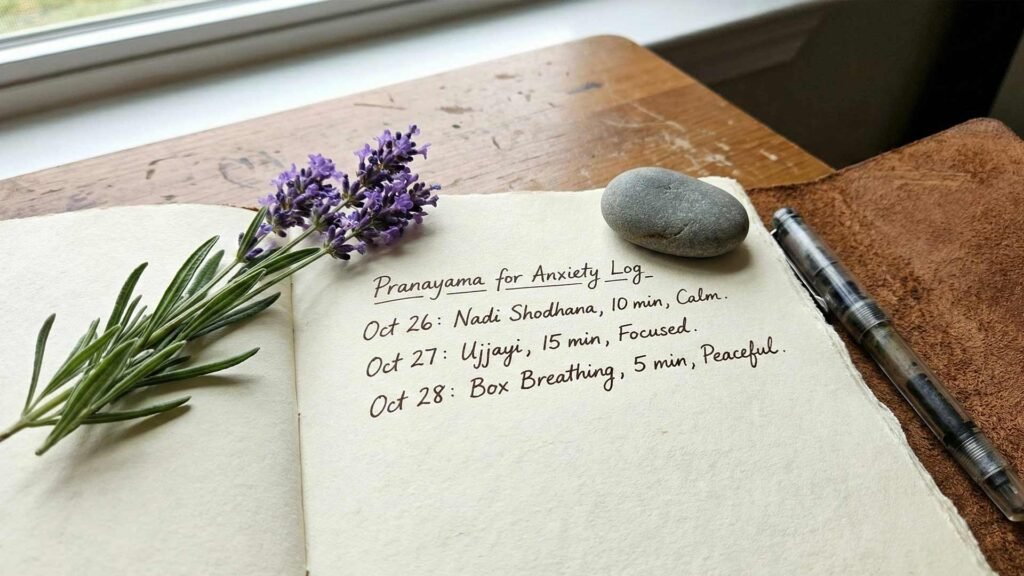
It is far more effective to practice 5 minutes of focused Nadi Shodhana every day than to practice for an hour sporadically once a week. Daily exposure reinforces the neural pathways linked to the parasympathetic nervous system, making it easier to activate the “calm” response when anxiety strikes.
Posture and Environment
- The Spine: Always ensure your spine is straight, whether sitting on the floor, on a chair, or in a firm bed. A straight spine allows the diaphragm (the main breathing muscle) to descend fully, maximizing lung capacity.
- Comfort: Use props like a firm cushion, folded blanket, or a meditation bench to elevate your hips. This prevents the back from rounding and makes it easier to sustain a straight posture for the duration of the practice.
- Timing: Practice on an empty or mostly empty stomach, ideally in the morning to set a calm tone for the day, or in the late afternoon/early evening to unwind from stress.
Troubleshooting Dizziness
If you ever feel dizzy, lightheaded, or nauseous during a Pranayama technique, it is usually a sign that you are breathing too deeply or quickly for your body’s current tolerance level.
- Action: Immediately stop the technique, lie down, and return to your natural, shallow breath until the feeling passes. Do not push through the dizziness. Gradually reintroduce the practice with a much slower, gentler pace.
By intentionally harnessing the breath, you gain a powerful, drug-free mechanism to override the body’s stress response, providing instant relief and long-term resilience against anxiety.
🛒 [OUR TOP PICK] Product Recommendation (Amazon UK)
A comfortable, supportive seat is essential for a consistent and effective daily practice, ensuring proper alignment to maximize breath capacity.
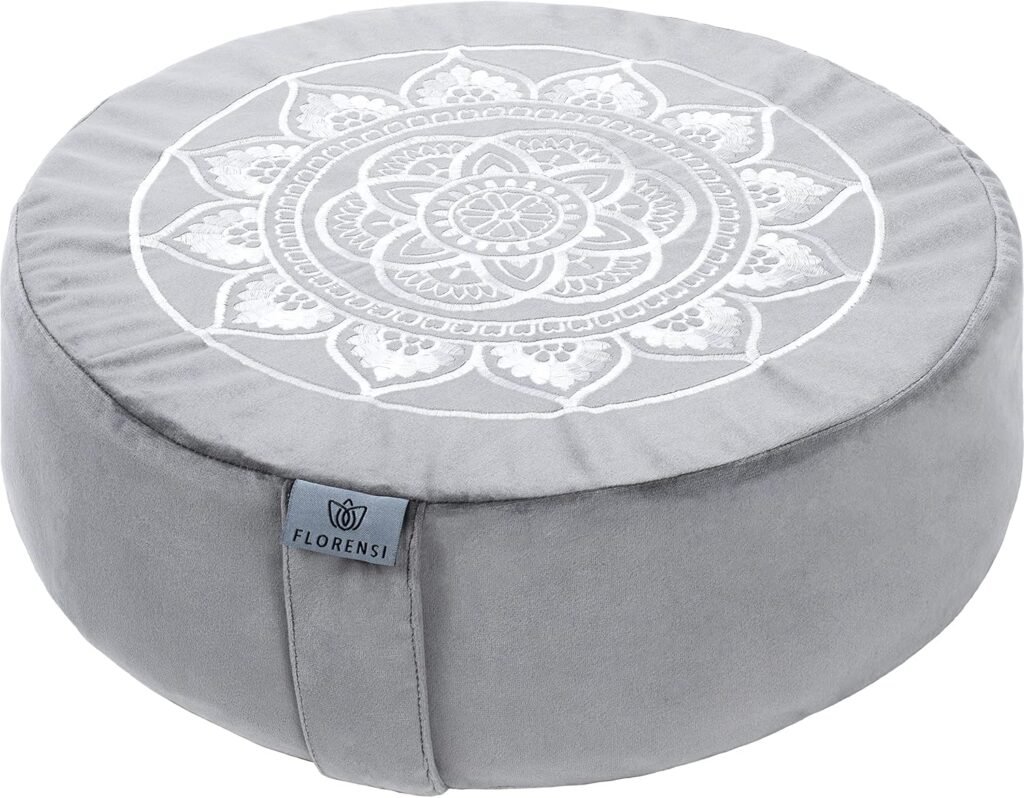
Product Type: Round Meditation Cushion (Zafu) (Provides the necessary comfortable height and stable foundation to elevate the hips, allowing the knees to drop and the spine to remain straight and supportive. This prevents discomfort and fatigue during long breathing sessions).