



If you suffer from the unpredictable, frustrating, and often painful symptoms of Irritable Bowel Syndrome (IBS), navigating the world of natural remedies can be overwhelming. However, for both relief and long-term regulation of gut function, Psyllium Husk for IBS is often the single most effective dietary supplement recommended by healthcare professionals, particularly gastroenterologists.
Psyllium Husk is a pure source of soluble fiber derived from the seeds of the Plantago ovata plant, an herb primarily grown in India. Its unique advantage lies in its capacity to regulate both extremes of gut motility—managing the hard, infrequent stools of constipation (IBS-C) while simultaneously firming up the loose, frequent stools of diarrhea (IBS-D). Unlike some harsher laxatives or anti-diarrheals, Psyllium works by promoting a gentle, physiological balance within the digestive tract. This comprehensive guide details the science behind its powerful regulatory effects, provides crucial guidelines for safe dosage, and explains why Psyllium should be a foundation of any gut health regimen.
⚕️ Disclaimer The content in this article is for informational purposes only and is not a substitute for professional medical advice. Always consult with a doctor.

Section 1: The Science of Soluble Fiber in the Gut
To understand why Psyllium Husk for IBS is so effective, we must look at how its structure interacts with water inside the gastrointestinal tract. Psyllium is classified as a bulk-forming laxative, but its action is far more nuanced than simple stool volume enhancement.
The Magic of Gel Formation
Psyllium is highly hydrophilic, meaning it is intensely water-loving. When the dry husk powder comes into contact with fluid (such as the water you drink or the fluids in your stomach), it absorbs the water and swells rapidly, forming a thick, viscous gel. This gel formation is the key to its multi-functional role:
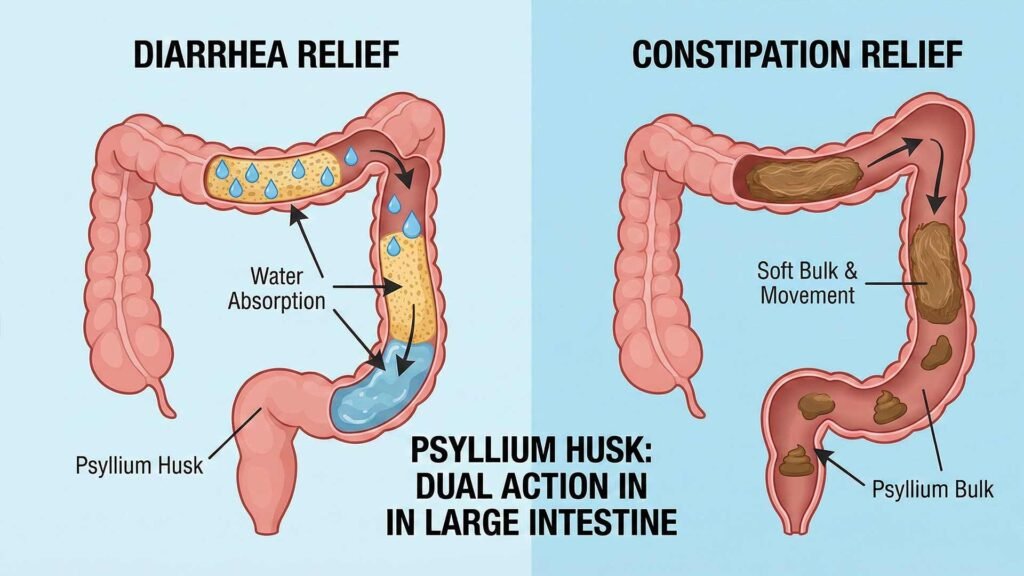
- Bulking Agent (Relief for Constipation): When the Psyllium gel reaches the large intestine, its non-digestible bulk adds significant volume to the stool. This added mass stimulates the natural peristaltic contractions of the bowel muscles, encouraging movement. Crucially, the gel itself keeps the stool hydrated and soft, making it easier to pass and significantly reducing the straining and discomfort associated with chronic constipation (IBS-C).
- Regulating Agent (Relief for Diarrhea): In cases of loose or watery stools (IBS-D), the Psyllium gel acts like a sponge. It absorbs the excess free water present in the colon, firming up the consistency of the stool. Because the fiber itself remains intact and resists fermentation in the small intestine, it provides gentle consolidation without causing irritation.
This ability to adapt to the gut’s current needs—providing bulk when the gut is slow and absorbing water when the gut is fast—makes Psyllium an ideal normalizing agent for the often-unpredictable nature of IBS.
Prebiotic Support for the Microbiome
While Psyllium is largely resistant to digestion, the gel structure is partially fermented by beneficial gut bacteria in the colon. This slow fermentation process acts as a prebiotic, meaning it feeds the good bacteria, such as Bifidobacterium and Lactobacillus.
When these bacteria ferment fiber, they produce beneficial short-chain fatty acids (SCFAs), notably butyrate. SCFAs are vital for gut health: they serve as the primary fuel source for the cells lining the colon, helping to maintain the integrity of the intestinal barrier and reduce inflammation—a core component of managing IBS symptoms.
Section 2: Psyllium Husk for IBS and Systemic Health
The benefits of Psyllium Husk for IBS extend beyond just motility and stool consistency; they offer important systemic advantages that support overall metabolic health.
Stabilizing Blood Sugar Levels
When consumed with meals, the viscous gel formed by Psyllium helps to slow down the rate at which food moves from the stomach into the small intestine. This results in a slower, more gradual release of glucose into the bloodstream. This stabilizing effect on blood sugar is beneficial not only for those with blood sugar concerns but also for preventing the energy crashes that can sometimes accompany rapid sugar absorption.
Supporting Cardiovascular Health
Psyllium Husk has been clinically shown to support heart health by lowering levels of LDL (“bad”) cholesterol. As the gel moves through the digestive tract, it binds to bile acids (which are made from cholesterol) and carries them out of the body in the stool. To compensate for the loss of these bile acids, the liver must pull cholesterol from the bloodstream to create new bile, thereby lowering circulating LDL cholesterol levels.
A Gentle Solution for Chronic Bowel Management
For long-term IBS management, the gentleness of Psyllium is key. Many over-the-counter laxatives can be stimulating and addictive, meaning the bowel relies on them to function. Psyllium, as a pure fiber supplement, works naturally to enhance the body’s own processes. Consistent daily use can lead to more predictable bowel habits, which drastically improves the quality of life for IBS sufferers, particularly those with IBS-C and IBS-M (mixed type).
Section 3: Safe and Effective Dosage and Administration
The effectiveness of Psyllium Husk for IBS relies heavily on proper administration. Without sufficient liquid, Psyllium can be ineffective, uncomfortable, or even dangerous.
The Crucial Rule: Hydration is Non-Negotiable
Because Psyllium expands so aggressively upon contact with water, it must be mixed with a large volume of liquid to prevent it from swelling prematurely in the throat or esophagus.
- Mixing Protocol: Measure your desired dose of Psyllium Husk powder and immediately mix it into a full glass of cold water (at least 8 ounces), juice, or another non-carbonated beverage.
- Immediate Consumption: Stir rapidly and drink the mixture immediately before it has a chance to fully gel and solidify.
- Follow-Up Water: It is highly recommended to follow the first glass with a second full glass of plain water. This ensures the fiber is well-hydrated throughout the entire digestive journey, minimizing the risk of blockage and maximizing its therapeutic effect.
Safety Warning: Never take Psyllium Husk dry. Insufficient liquid can cause the powder to expand in the throat, leading to choking or esophageal obstruction. If you feel tightness in the chest or throat after taking Psyllium, seek immediate medical attention.
Determining the Optimal Dose
Start low and go slow. This allows your gut bacteria and digestive system time to adjust to the increased fiber.
- Starting Dose: Begin with 1/2 teaspoon (approx. 2.5g) mixed in a full glass of water, once a day for the first week.
- Gradual Increase: Gradually increase the dose every few days, monitoring your tolerance and symptoms.
- Optimal Therapeutic Dose: The typical therapeutic dose for adults is 5 to 10 grams, taken 1 to 2 times per day. Your optimal dose will depend on your IBS subtype and your dietary fiber intake. For IBS-D, a higher dose may be necessary to firm the stool; for IBS-C, the focus is more on ensuring adequate water intake with the fiber.
Timing and Medication Interactions
Since Psyllium works by physically absorbing substances, it can bind to other medications and supplements, reducing their absorption and effectiveness.
- Take Away from Medications: Always take Psyllium Husk at least 30 minutes before or 1-2 hours after any oral medications or other supplements.
Section 4: Troubleshooting and Product Selection
While highly effective, starting a fiber supplement can sometimes come with minor side effects as the body adapts.
Managing Initial Side Effects
The most common initial side effects of Psyllium Husk for IBS are mild gas, bloating, and temporary abdominal discomfort. These symptoms are usually due to the gut bacteria beginning to ferment the new source of prebiotic fiber.
- Troubleshooting: If these symptoms are bothersome, reduce your dose back to the starting amount (1/2 teaspoon) and stay at that level until the symptoms subside, then try gradually increasing the dose again. Ensure your water intake is very high throughout the day. These side effects typically diminish entirely within 1 to 2 weeks.
Choosing the Right Product: Powder vs. Capsules
Psyllium is available in powder and capsule form, but the powder form is generally superior for managing IBS:
- Powder: Allows for easy titration (adjusting the dose) and, crucially, ensures the fiber is mixed with the necessary large volume of water required for therapeutic action and safety.
- Capsules: While convenient, capsules often do not contain enough fiber to reach the therapeutic dose without taking an impractical number of pills, and they still require a large water intake to ensure the capsule shell dissolves and the fiber is adequately hydrated.
Look for pure, unflavored Psyllium Husk powder to avoid added sugars, artificial colours, or flavourings that may irritate a sensitive IBS gut. Organic sourcing is often preferred to ensure minimal exposure to pesticides.
By understanding its mechanism of action and strictly adhering to the proper hydration protocols, incorporating Psyllium Husk for IBS into your daily routine offers a proven, gentle, and holistic pathway to regulating your digestion and restoring consistent bowel comfort.
🛒 [OUR TOP PICK] Product Recommendation (Amazon UK)
A pure, unflavored, organic powder is the best choice for flexible and effective therapeutic dosing.
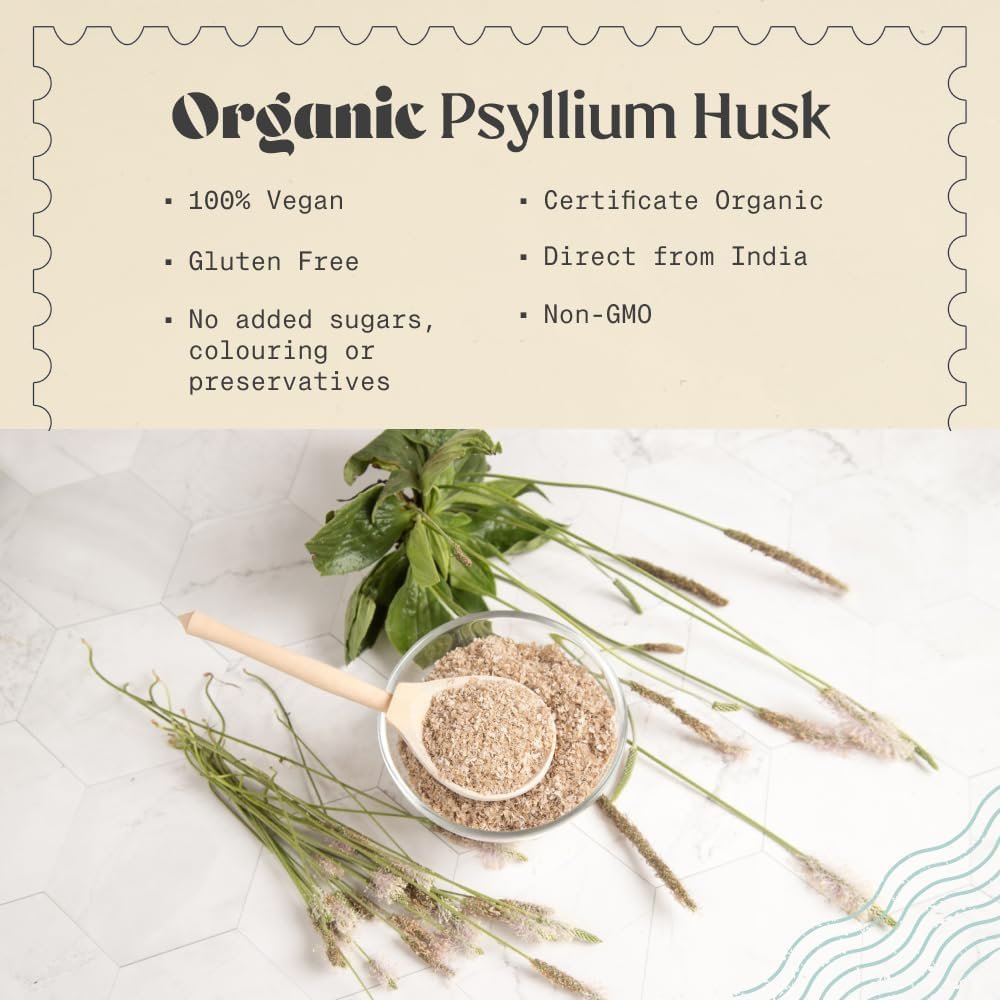
Product Type: Organic Psyllium Husk Powder (This powder provides the necessary pure soluble fiber in a form that allows for easy mixing with water and accurate dosage adjustments, which is vital for effectively managing various IBS symptoms).